Wednesday, November 7, 2012

Mommy, Mathematics is a REAL painful thing!


There are some people who enjoy solving complex mathematic equations, but on the other hand; most of people in the World suffer and struggle with trying to solve indecipherable exercises. A study revealed that the anxiety of solving mathematical operations could produce a brain response similar to physical pain.

The study, which was published in the scientific journal Plos One, was carried out by researchers from the University of Chicago; it consisted of recruiting adult volunteers who feel afraid of Mathematics under different situations: from reading a book to the basic mathematical requirements.

The researchers scanned the brains while the volunteers were solving their mathematical exercises and they found that an alert lights in areas corresponding to bodily danger and physical pain.

“For someone who is afraid of math, the expectancy of encouraging them produces a similar neuronal response as getting a hand burned” explains Dr. Sian L. Beilock, the author of the study. Nowadays, we can consider math solving as a potential and emergent enemy to the anxiety rises.

What about you? Did you ever suffer from solving exercises at school? Was it real painful for you as a student? Would this study considered trustworthy one or is it just an excuse to people who don't like solving math exercises?

Here you can find a useful video which explains the findings of this study.

A dream come true


Electrode
What would you think if I say there is no longer the need to use your hand to change the TV channel when advertisements start? What if, instead of that, you could simply use your brain to do it? Many of you may be thinking “a dream come true”. It appears like dreams are becoming a substantial possibility these days. Thanks to a revolutionary new device, which is calling everyone's attention, this dream is very close to become a reality. 

The Braingate is a device made of electrodes which are surgically implanted on a person’s motor cortex that helps the owner to control objects and to communicate effectively. It is designed to assist people who had suffered accidents or strokes and, as a consequence, are currently disabled. The user can move external objects using only the mind/thought. However, this idea is still in its infancy despite it has been already tested on real people.  

A controversy that surrounds this wonderful discovery has to do with the abuse of the system. It was made specifically for people with disabilities, but it’s believed even healthy people may feel the desire to “improve” their lives by using the system. How drastically our lives could change if we didn’t have the necessity to move to perform common actions like drinking an orange juice or turning the page of our book? If you have the chance, would you choose to implant electrodes on your brain in order to make your life easier?

If you want to take a deeper look on the Briangate system, click here.

Tuesday, November 6, 2012

To Eat or Not to Eat, Delicious Addiction


In Chile, we have a particular addiction; we are addicted to bread. But this delicious food may not be the same old nutritive food that it was when it was created.
A hundred years ago the bread was eaten in a more unprocessed manner. The grain was crushed and the bread was made in a different ways, depending on what the culture had established as the proper way to bake it and eat it. During the Industrialization process and in order to supply larger masses of people, this tasty food lost all of its nutritional qualities.
Currently, the grain is collected by mills in an unsanitary way, mixed with insects and dirt. After this collection, the grain is processed by machines that crush it and separate the resulting material through different sieves. The product of this process is the white and refined flour we can buy at any market.
In this procedure, some of the most important properties of the ancient and nutritive bread are lost. The wheat germ, which is rich in proteins and has a highbiological value; and vegetal hormones, useful in regulating the process and symptoms of menopause, are sold at high prices to avoid the vegetal fat from rotting the bread before it gets to the destination in which it will be sold.


Another disadvantage of this procedure is the wasting of the wheat bran which is rich in minerals: Potassium, Ore and Cadmium; and also in B and C vitamins. This is caused by the use of metallic rollers that burn these minerals and vitamins leaving just fiber which is the reason why the whole wheat bread and the wheat bran that we find in the supermarket is brownish.
Finally, the whole wheat bread you may buy in a bakery is a mixture between whole wheat flour  and the white refined flour obtained through the noxious process described before. This mixture allows the baker to obtain more elegant breads. Thus, we end up eating a product with no nutritional value and harmful consequences in our health.

Urbanization or habitat destruction?


Do you know where most of the people live? Nowadays, the answer seems to be obvious: we live in cities. It is estimated that half of the world’s population live in cities (click here); however, the physical space we name “city” has not always been like we know it today. As population grown, it was necessary to find new spaces not only for people to live, but also for them to have a secure and comfortable space where settling down. As a consequence, the process of urbanization started, and the zones that in the past were part of the countryside or forest, today are considered as part of urban zones.

Urbanization is the growth of urban areas as a result of rural migration. This process has lots of benefits; for example, cities are more efficient in supplying basic needs than rural areas; the access to education, health, and social and cultural services is more available to people; and social integration is better than in villages. 

Although all these benefits, urbanization has a negative impact in our environment. This process can increase atmospherically temperature; produce pollution due to factories and automobiles; change the natural water circle; and destroy natural habitants of flora and fauna.

Population will go on growing; therefore, urbanization is something we cannot stop. Do you think that it is fair to use the place of animals and plants to create cities? Is human developing more important than animals and plants’ security? Can we do something to preserve natural areas free of urbanization?


Click here to watch a video about the struggle burrowing owls have to face because of urbanization.

Click here for further information.

Monday, November 5, 2012

Why is he robot-like? Oh, he is a scientist...


Probably the stereotype of bright, genius people,  who are not empathetic at all, such as Sheldon Cooper, could have a scientific explanation.  According to a study conducted by researchers from CWRU and WUSTL, human beings may not be able to be analytic and empathetic at the same time. 

  45 healthy college students were shown randomly several written and video problems requiring them to think about how others may feel, and problems which required physics to resolve, while their brain activity was recorded by a magnetic resonance imager.

The findings revealed that when facing questions related to social issues, the students’ brain areas associated with empathy and social skills were activated, whereas the analytical areas were deactivated. On the other hand, when the students faced physics questions, the brain areas associated with analysis were activated, and the social networks deactivated.

"Empathetic and analytic thinking are, at least to some extent, mutually exclusive in the brain" concluded Anthony Jack, lead author of the study. Disabilities such autism, or mental disorders such as schizophrenia could be better understood. 

However, critics have already arisen. Some people claim that it is not possible to affirm that one network completely suppresses the other just because it appears so in the brain scans; in other words, brain scanning experiments should not be overvalued and seen as the only way of knowing how the brain works. Actually, philosophy could play an important role too.

Furthermore, it is said that this study attempts to solve the “explanatory gap”, which according to Jack, it corresponds to "the disconnect between experiential understanding and scientific understanding.”

 Do you think that this study really solves the concept of "explanatory gap"? Is the physiological evidence enough to explain a phenomenon like this one?

Sunday, November 4, 2012

PREVENTING CHILDHOOD OBESITY BY REDUCING CONSUMPTION OF CARBONATED DRINKS: CLUSTER RANDOMISED CONTROLLED TRIAL.

A study called "Preventing Childhood Obesity by Reducing Consumption of Carbonated Drinks: Cluster Randomised Controlled trial" involves a project aimed at making an intervention inside a variety of schools in England. These interventions try to discourage children from the consumption of "fizzy" or carbonated drinks, telling them that it would improve their general wellbeing. As a result, this study found out that by diminishing the intake of carbonated drinks, weight gain can be prevented. Further research was done two years later, and they discovered that these changes did not remain.


Here's the link to our presentation:

http://my.brainshark.com/PREVENTING-CHILDHOOD-OBESITY-533288333

Chagas: The Unknown Death

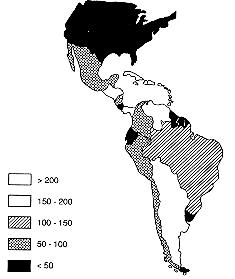
Estimated incidence of Chagas disease in the Americas

It is known how insects can be vectors for terrible diseases. Yellow fever and malaria are evidence of that. But, have you have ever heard about Chagas disease?

Considered the “Aids of Latin America”, this disease is caused by Trypanosoma cruzi, a protozoan transmitted to humans by several insects. These insects bite a human to feed on its blood. Then, the human scratch the bite and that gets the T. cruzi into the person’s blood.  Chagas disease is so lethal because the protozoan attacks the nervous system, the digestive system and heart. In addition, symptoms for its chronic stage can only be seen after many years (about 10 to 20 years later). And, of course, the result will be always the same: death.

Chilean vinchuca (Triatoma infestans)
Believe it or not, Chile is hometown for this disease. It is transmitted by “vinchucas” (Triatoma infestans): insects which live mainly in rural areas. Chagas was considered eradicated in 2000. Nevertheless, in 2002 the Ministry of Health started a campaign to teach people how to prevent this deadly disease. This campaign was released in hospitals from rural areas because of the characteristics of the disease. However, experts have stated that this disease is not a “countryside illness” anymore, because vinchucas are adapting to live in urban areas. In fact, this statement is becoming stronger nowadays because of several cases detected in urban and pre-urban places.

Chagas is perhaps a disease which has not been studied enough, even though has deadly consequences. Should this disease remain so unknown? Do we need more studies about it? How can we take responsibility in order to prevent this disease? For more information check the links below:

- An article by the Daily Mail about Chagas disease in America.


- A news report by American broadcast company Univision (Spanish language)