Showing posts with label brain. Show all posts

Friday, November 16, 2012

Fear of going to the dentist? Blame your parents!


Have you ever had that feeling of anxiety before going to the dentist? What do you think is the source of that feeling? A new study by scientists at the Rey Juan Carlos University of Madrid confirms that there is an emotional transmission of this fear of going to the dentist among family member, and especially the parents.

The study conducted by the scientists of this university has come to the conclusion that the higher the level of anxiety of one member of the family, the higher the level of fear of the rest of the family. Furthermore, the scientists were able to identify specific roles the family members play in the transmission of this fear. In fact, they discovered that even though the mother and the father play an important role in this matter, it is the father who influences the most in the transmission of the dentist fear. Children tend to pay attention on their parents’ response, but they focus mainly on the father and how he reacts to different situations that may happen at the dentist and how stressful they can be.

A possible solution for children to overcome this fear, according to the scientists, would be to make the parents—and especially the father—go under dentist fear prevention campaigns so that a positive emotional contagion is reinforced. This would help parents to avoid showing any signs of fear or anxiety in front of their children when going to the dentist.

Imagine you have children, what would you do to prevent the transmission of this fear of going to the dentist? Do you think it’s important for parents to show no signs of fear at all? Let me know what you think, I’m really interested in your thoughts.

More info here --> Fear of the dentist

Why Einstein was a Genius?

When we ear the name "Einstein" we think of an old man with a funny haircut, always wearing the same suit, and a very very intelligent man. And have you ever questioned why was he so clever, what was about this guy that was different from others?

At an early age Albert was not a big shot. He didn't speak until he turned 4; failed some subjects at school and even a teacher said that Albert was not going to do anything in life. Little did he know.

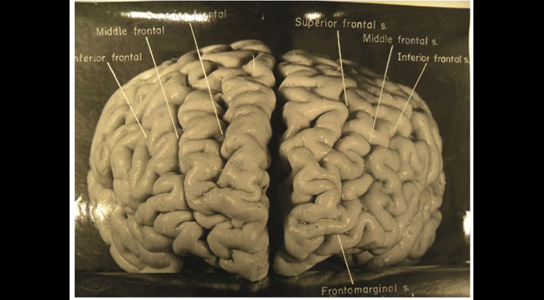
That was about his early age. I will skip his career (because is not the topic) and will tell you about his afterlife. After he died his brain was donated (by his family) to science to see if his brain was different from the rest, ordinary people. At first weight Einstein's brain was a bit smaller than averege (1230 grams), but then they started finding the differences: A greater density of neurons in some parts of the brain and a higher than usual ratio of glia (cells that help neurons transmit nerve impulses) to neurons. Also several regions feature additional convoltions and folds (wrinkles that give brain's unique shape) For example, the regions on the left side of the brain that facilitate sensory inputs into and motor control of the face and tongue are much larger than normal; and his prefrontal cortex-linked to planning, focused attention- is also greatly expanded.


Maybe he came out with all his theories because he needed to show us how he saw the world that told hin that he was a misfist.


Thursday, November 15, 2012

Freestyle rapping and brain activity: How does it work?


Have you ever seen a rapper perform and wondered how they manage to come up with those complex rhymes so naturally? Well, a new study by researchers at the National Institute on Deafness and other Communicational Disorders (NIDCD) found out that for a rapper to create those rhymes, some brain processes have to take place.

The study consisted of twelve rappers dropping some rhymes while on a MRI. First, they had to memorize a given set of rhymes and a beat to perform to. Once they did that, they were given the same beat, but asked to freestyle instead. No matter whom the rapper was, their brains activated differently when memorizing than when improvising.
When a rapper improvises, some parts of his brain shut down, more specifically the areas that are linked to self-control and monitoring; essentially, any area that might disrupt the creative flow of ideas. While on the other hand, when improvising, other areas lit up to help the rapper with his freestyle rhyming and those are the portions of the brain related to motivation, integration and activation, and also the areas linked to the mental lexicon and vocabulary. If you think about it, it’s something pretty logical as if you overthink too much, it won’t come up as a natural freestyle rhyme. So, in a way, the rapper has to disconnect from his brain to be able to rhyme. The same would happen to Usain Bolt if he started thinking about how to run and move, or how are his opponents doing; his performance wouldn’t be the best.

So, what are the implications of this study, apart from understanding how rappers are able to do what they do and how? Well, researchers are not sure yet, but in a future it might help to develop quicker thinking and, who knows, maybe any of us would be able to become amazing rappers.

Here's the link to the full article where you'll also find the explanation of the picture above.

Tuesday, November 13, 2012

Mom, I'm not wasting my time! I'm regenerating my brain

Most of us can relate to music in some ways. For most of us music is very important in life. But, have you ever thought what music does to your brain? Did it ever cross your mind that maybe you are repairing your brain while enjoying this popular activity
While there's some discrepancies about what is music and what to call good music, scientists have discovered that the effects of music on our brains are similar to those of enjoying food, sex and even consuming some drugs.
According to a study conducted in 2001: “This finding links music with biologically relevant, survival-related stimuli via their common recruitment of brain circuitry involved in pleasure and reward.”  Some statements have been made such as “music can repair brain damage”, “music can kick an addiction”, “music can improve your immune system”, etc. , of course although some of these statements might be truth, further research is needed, and I have to say that there’s a little bit of scientific basis to make some of this statements, but again the way in which media report the breakthroughs is very different to the actual findings of research teams. However, music can also be banned from the brain very specifically as shown in a study conducted on one specific case in 1996.
What we do know for certain is that some of truth we find in the statement that music can repair brain damage.  As shown in a study in 2008, Music facilitates the neurogenesis, regeneration and repair of neurons. This study proposes that music can repair the brain by adjusting the production of steroid which would lead to brain and that music may affect  the receptor genes related to these substances, and related proteins. This research team states that music could even be used to prevent Alzheimer’s disease and dementia in a less invasive way than current accepted treatments.
It would be very interesting to learn more about this topic, but one thing is clear to me, Music is good for our brains, even for the emotionally impaired.
Clearly there’s a lot of research in this field and we would certainly like to know more, but I wonder if this effect comes from all music styles. Have you ever read something about this specific matter? What is your opinion?
I leave you with the most used music for this kind of research and I’ll go listen to some music myself, I think my brain could use some repair:
http://www.youtube.com/watch?v=U8v12M2mRVM&feature=fvwrel
Here you can find some entertaining statements about music, some of them have scientific basis, some of them are not even near to be proven yet:
http://www.cracked.com/article_18405_7-insane-ways-music-affects-body-according-to-science.html

Monday, November 5, 2012

Why is he robot-like? Oh, he is a scientist...


Probably the stereotype of bright, genius people,  who are not empathetic at all, such as Sheldon Cooper, could have a scientific explanation.  According to a study conducted by researchers from CWRU and WUSTL, human beings may not be able to be analytic and empathetic at the same time. 

  45 healthy college students were shown randomly several written and video problems requiring them to think about how others may feel, and problems which required physics to resolve, while their brain activity was recorded by a magnetic resonance imager.

The findings revealed that when facing questions related to social issues, the students’ brain areas associated with empathy and social skills were activated, whereas the analytical areas were deactivated. On the other hand, when the students faced physics questions, the brain areas associated with analysis were activated, and the social networks deactivated.

"Empathetic and analytic thinking are, at least to some extent, mutually exclusive in the brain" concluded Anthony Jack, lead author of the study. Disabilities such autism, or mental disorders such as schizophrenia could be better understood. 

However, critics have already arisen. Some people claim that it is not possible to affirm that one network completely suppresses the other just because it appears so in the brain scans; in other words, brain scanning experiments should not be overvalued and seen as the only way of knowing how the brain works. Actually, philosophy could play an important role too.

Furthermore, it is said that this study attempts to solve the “explanatory gap”, which according to Jack, it corresponds to "the disconnect between experiential understanding and scientific understanding.”

 Do you think that this study really solves the concept of "explanatory gap"? Is the physiological evidence enough to explain a phenomenon like this one?

Sunday, October 14, 2012

Why Do Songs Get Stuck In Our Head?


Most of us have been victims of catchy songs or melodies that get stuck in our heads and that are hard to get out. According to a study called “Songs That Cause the Brain to ‘Itch’: UC Professor Investigating Why Certain Tunes Get Stuck In Our Heads” by Carey Hoffman from the University of Cincinnati, some of the songs that get stuck in our heads more easily are “The Macarena” and “We Will Rock You”.

Dr. Williamson, a memory expert at Goldsmith's College in London, also found that scientists use many terms to describe this subject - stuck-song syndrome, sticky music, and cognitive itch, or most commonly "earworm".

Scientists suggests that there may be psychological reasons why some songs are more likely get stuck in our minds, including memory triggers, emotional states and stress.

According to Vicky Williamson, an American psychologist, these are some earworm causes: recent music exposure, repeated music exposure, word association, people association (when memories of a person are associated with a song), situation association (e.g. Christmas may cause you to remember carols), stress, surprise, dreams, and mind wandering.

Other experts say that some earworms causes are song repetition, musical simplicity and incongruity.

Williamson explains that earworms are an everyday phenomenon: “People always get a tune stuck in their head, it happens to at least 90 percent of people. It’s a very effortless form of memory, we're not even trying to remember, and this music comes into our head and repeats over and over again. Imagine if we could recall facts that we wanted as easily as we can bring new ones to mind without even trying."

On the video “Earworms, The Psycho-Science of Memorable Melodies” by A Viewpoints Media, the phenomenon of earworms is easily explained.


But what if you want to get rid of that annoying earworm? Experts say that going for a run or doing a crossword seems to help. Also, it is said that listening to other new songs may also work. 

Earworms show us how fragile−and at the same time strong− our memory is. Have you ever been victim of earworms? If so, how did you get rid of that song or melody stuck in your head? 

Sunday, October 7, 2012

Technology for the differently abled


Nowadays, people with physical disabilities have a hard time keeping up with the times, as their limitations will not allow them to have access to certain services and technologies, including computers and the internet. Luckily, a group of Chilean students came up with a solution for them, so that disabilities will not limit their access to technology and, therefore, to social integration. 


Last year, a group of three computer science students from Federico Santa Maria Technical University developed LifewareIntegra, a program that allows handicapped people to use computers. They combined a head device with sensors, that are able to pick up brain activity, and software, that interprets this information, to let the user have full access to a computer and its applications through a set of tools developed by its creators. The head device was originally created for gaming purposes, but these students had the vision to give it a whole new purpose.


LifewareIntegra was tried for the first time on Jenifer Astorga, a 26-year-old woman who lives with quadriplegia. The test was a huge success and she seemed really happy afterwards. If the software is further developed, it might one day help a lot of other people like Jenifer to be rehabilitated and get a job.