Saturday, September 15, 2012
Water Fluoridation: benefit or risk?
The addition of a fluoride compound to a public water supply for the purpose of reducing tooth decay is known as water fluoridation. This practice has been introduced in many countries, such as Brazil, Australia, the U.S., and Vietnam. Our country is not the exception. According to the Oral Health Department of the Chilean Ministry of Health, 70.5% of the Chilean population has been receiving fluoridated water. Nowadays, there is a controversial environment surrounding this topic. Many dental organizations support water fluoridation; however, some others reject this practice whenever it is proposed.
The controversy came up from ethical, moral, political, and safety concerns. Opponents all over the world argue that this practice:
• It is a form of obligatory mass medication. The consent of all people cannot be reached, and water supplies cannot control the amount of fluoride that every single person receives. In UK, the Green Party considers water fluoridation as a violation of Article 35 of the European Charter of Fundamental Rights, which it is about Health care.
• It can cause dental fluorosis. Scientific evidence proves that water fluoridation can alter the tooth development on children; however, the Australian National Health and Medical Research Council posits that this effect is just cosmetic and it doesn’t represent any risk for people’s health.
• It is considered to be unsustainable. This practice is really expensive and can have impacts on the economy of the countries. The Canadian Green Party claims that water fluoridation is not effective enough to accept the costs.
Although all the statements against it, water fluoridation is widely used. So, Should we be against, or for this practice? Is it really necessary?
Labels:
benefits,
health,
oral health,
risks,
tooth decay,
water
Are vaccines bad for our health?
Vaccines claim to be the solution to control diseases.
The government forces people to use them under this assumption and claim they
are safe, but can we know for sure they are unharmful and cannot damage our
bodies?
The other day I was watching the TV Show “Law and
Order svu” and the detectives dealt with a case of a mum that didn’t want her
kid be vaccinated. She claimed vaccines could cause deformations, autism, brain
damage and even death. I wanted to believe this, but as it is a TV Show I
couldn’t rely just on that so I started to do my own research.
This is what I found out:
There are enough scientific evidences to prove that
vaccines can be harmful to our bodies. In the article VACCINE CHILD ABUSE are named over a hundred diseases
caused by this injection, being the most famous autism, Alzheimer
and lupus.
Alan
Phillips in his article “Vaccination Myths: Contradictionsbetween Medical Science and Immunization Policy” gives
a number of reasons for which we shouldn’t vaccinate, being the most important that “vaccination is an unreliable means of preventing
disease”.
Vaccines have proved to be effective, but like any
other medication are not always infallible. They can damage our body, and
authorities shouldn’t force people to use them. They have to tell citizens the pros
and cons of using vaccines, and then it would be up to us whether we decide to
use or not the injection.
Monday, September 10, 2012
Acupuncture: an effective treatment or a placebo?
It has been
a big debate among doctors about the real effects that acupuncture has on
patients. Some doctors say it is nothing but a placebo effect, while others
ensure it has veritable effects.
Through time, studies haven’t been able to
present convincing results about the effectiveness of acupuncture. Anyway, the
popularity of this alternative medicine, which involves inserting needles into
specific points in the body, has increased considerably during the last years.
Recently, some studies have shown that acupuncture have effects, but only
modest effects. This result doesn’t give a clear answer to the main question
and the debate keeps going.
The important issue is to have instructed professionals applying the acupuncture to patients. All kind of medicines have side-effects if they are performed or supplied by inexpert people.
What doctors agree with is -an effective treatment or a placebo- acupuncture has helped since ancient times to cure different types of pains such as chronic pains, back pains or headache, chemotherapy nausea and vomiting and in postoperative dental pain addiction, stroke rehabilitation, menstrual cramps, tennis elbow, fibromyalgia, osteoarthritis, carpal tunnel syndrome, and asthma. In all these cases, this treatment may be useful as a whole alternative medicine or as an assistant treatment.
After all, what is more important: Whether the treatment is
helping people or not, or the technical data?
Sunday, September 9, 2012
Beware: Someone is Spying !
We, web users, tend to sharply rely on the
security of the personal information that we provide: bank account codes, birthday
dates, financial story and so on. But, what two and half billion people who
constantly surf the Internet do not know is that our data is being studied, compiled,
and stored by a specialized industry which is in charge of taking this material
to be evaluated and offer products such as, loans, music, magazines, etc.,
based on the information that we freely provide.
This phenomenon is nowadays called behavioral
tracking. The companies use the information to create a profile with our likes
and dislikes according to the we pages visited. Lately, those companies have been criticized because
they try to persuade of by using or doing something based on the data
collected.
Gary Kovacs, who is the CEO of the Mozilla
Corporation, designed and developed an experimental browser add-on in order to
see where is your information going on and see who is tracking you which is
called Collusion.
So, next time you share any kind of material on
Internet, the companies are going to get your data and use it for their benefit. All this information starts to be Worldwide shared from the moment that
you press the button “Enter”.
So, have you already been caught by these companies? Are we going to create false identities on Internet in order to keep your personal information safe?
PS: You will find a TED talk attached. Gary Kovacs is the speaker and he expands on this topic: Behavioral Tracking.
Organic Foods vs. Genetically Modified Foods: Which option is the best one?
For most of people, the answer to this question may be the first option with eyes closed; nevertheless, a recent research on this controversy could change several minds.
After analyzing approximately 200 studies on the differences of organic and conventional food regarding nutritional content, a group of scientists from the Stanford University have concluded that there is not enough evidence to prove that organic foods are healthier than conventional foods. In fact, both types of foods proved to have almost the same amount of nutrients such as vitamins, proteins, etc.
Even though the studies were conducted on humans, they didn’t last more than two years. That means that there is no evidence to analyze the long-term impact. Since it is claimed that genetically modified foods (GM foods) could have long-term consequences, it is not possible to say whether they are completely healthy, or completely dangerous.
Concerning organic foods, they may be additive and pesticide free; however, their price is more elevated and the production is slower than GM foods, considering that the demand is greater than the supply.
Even if GM foods are widely criticized because of the impacts of their production, or the possible consequences for the consumers, they’re being widely spread throughout the world.
In the world we’re living nowadays, the phrase “the faster the better” has become part of our lives. Should we deal with it by accepting GM foods? Or should we try to respect the normal pace of nature by preferring organic foods?
After analyzing approximately 200 studies on the differences of organic and conventional food regarding nutritional content, a group of scientists from the Stanford University have concluded that there is not enough evidence to prove that organic foods are healthier than conventional foods. In fact, both types of foods proved to have almost the same amount of nutrients such as vitamins, proteins, etc.
Even though the studies were conducted on humans, they didn’t last more than two years. That means that there is no evidence to analyze the long-term impact. Since it is claimed that genetically modified foods (GM foods) could have long-term consequences, it is not possible to say whether they are completely healthy, or completely dangerous.
Concerning organic foods, they may be additive and pesticide free; however, their price is more elevated and the production is slower than GM foods, considering that the demand is greater than the supply.
Even if GM foods are widely criticized because of the impacts of their production, or the possible consequences for the consumers, they’re being widely spread throughout the world.
In the world we’re living nowadays, the phrase “the faster the better” has become part of our lives. Should we deal with it by accepting GM foods? Or should we try to respect the normal pace of nature by preferring organic foods?
Labels:
differences,
foods,
genetically modified,
GM food.,
health,
Medicine,
nutrition,
organic,
science,
Stanford University,
studies,
transgenic
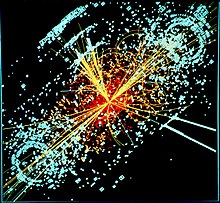
The LHC: The "Life Hazard Cause"?
The pursuit for hints that can lead
these nuclear scientists to the discovery of the key constituents of matter,
the scrutiny in the course of a possible set of hidden dimensions, and the
unearthing of the tremendously sought-after Higgs Boson, which is considered the elemental particle of the substance of the whole universe (i.e., the very
origin of it), are the major purpose of the construction of this 27-kilometre cylinder.
Nevertheless, these tempting raisons
d'être became nothing against the terror unleashed a few years ago by the
time the LHC was set into gear; this colossal particle accelerator has been
said to be the potential reason of the end of the world. How is this possible?
Why was this sort of massive destruction weapon built, knowing that it could
mean the end of life in planet Earth as we know it?
In simple
terms, what happens inside the LHC is a series of ‘mini-big-bangs’ that are
supposed to last a few seconds and then vanish into thin air—something that has
not been proven yet, which has caused this hullabaloo. However, these speculations
seem not to have any mathematical support and scientists affirm that there is
not anything to be concerned about.
Saturday, September 8, 2012
Blood Transfusion Vs. Religion
Blood transfusion, as you may know, is the process of transferring blood from one person to another through an intravenous manner. This process, not as simple as it sounds, has given the possibility of saving thousands of lives.
Lots of investigations needed to take place to learn about more blood, all this in order to succeed in blood transfusion. After running lots of tests, investigators discovered that it was possible to store blood and soon after, blood banks were a viable choice.
After it is donated, blood goes through specific tests before it gets to the patient’s bodies, to assure that there is no danger of transmitting infections or diseases, like AIDS, among others. In spite of this, some people refuse blood transfusions not just because of reasons that have to do with fear of catching a disease, but also with religion.
We have been able to see some specific groups within our society strongly rejecting blood transfusion. It is similar to what happens with organ donation in the sense that people usually think it is unnatural to remove someone’s organs from their –dead or alive- bodies to put them into a person who needs it, but they say it’s because of biblical reasons. I wonder though, what is wrong with medicine improving so much that can save people’s lives? What would you do if it was your mother, or brother, or son is in the need of blood transfusion and your religion forbids it?
When talking about blood transfusion, would you stop from saving your beloved ones just because your religion says it’s not a right thing to do?
Lots of investigations needed to take place to learn about more blood, all this in order to succeed in blood transfusion. After running lots of tests, investigators discovered that it was possible to store blood and soon after, blood banks were a viable choice.
After it is donated, blood goes through specific tests before it gets to the patient’s bodies, to assure that there is no danger of transmitting infections or diseases, like AIDS, among others. In spite of this, some people refuse blood transfusions not just because of reasons that have to do with fear of catching a disease, but also with religion.
We have been able to see some specific groups within our society strongly rejecting blood transfusion. It is similar to what happens with organ donation in the sense that people usually think it is unnatural to remove someone’s organs from their –dead or alive- bodies to put them into a person who needs it, but they say it’s because of biblical reasons. I wonder though, what is wrong with medicine improving so much that can save people’s lives? What would you do if it was your mother, or brother, or son is in the need of blood transfusion and your religion forbids it?
When talking about blood transfusion, would you stop from saving your beloved ones just because your religion says it’s not a right thing to do?
Subscribe to:
Posts (Atom)